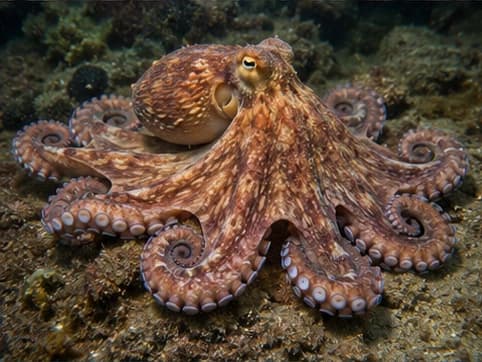
A common octopus can rapidly change its skin color and texture.
Pigment cells and specialized muscles let the animal blend with rocks, sand, algae, or reef surfaces. This camouflage helps it avoid predators and approach prey without being noticed.
Its beak is the main hard part of its body.
The common octopus has no internal shell or rigid skeleton. Its hard beak sits where the arms meet, which is why the animal can squeeze through openings larger than the beak.
Octopus ink can hide an escape and confuse predators.
When threatened, a common octopus can release dark ink that clouds the water. National Geographic notes that the ink can also dull a predator's sense of smell.
The common octopus has three hearts.
Two hearts help move blood through the gills, while the third pumps blood to the rest of the body. This setup supports an active animal with a demanding marine lifestyle.
A common octopus can regrow a lost arm.
If a predator grabs an arm, the octopus may escape and later regenerate the lost limb. Regrowth is one reason arm loss does not have to be fatal.
The common octopus is considered one of the most intelligent invertebrates.
Its flexible behavior includes hiding, exploring, learning, manipulating objects, and using different escape tactics. That intelligence helps a soft-bodied animal survive in predator-rich habitats.
A common octopus usually lives only a short time.
Many sources describe the common octopus lifespan as only about one to three years. That short life is paired with fast growth and high reproductive output.
Female common octopuses can lay huge numbers of eggs.
National Marine Sanctuary Foundation describes females laying between 100,000 and 500,000 eggs. The female guards the eggs, and only a small fraction of hatchlings survive to adulthood.
A common octopus can jet away by pushing water from its mantle.
Jet propulsion gives the animal a fast escape option when camouflage or hiding is not enough. It can also crawl across the seafloor when speed is less important.
Common octopuses often hunt crustaceans and mollusks.
Crabs, crayfish, shrimp, clams, and other shell-bearing prey are common targets. The octopus uses arms, suckers, beak, and venomous saliva to handle difficult prey.