
Red PandaAdaptation
Red pandas have a wrist bone that works like a false thumb.
This enlarged wrist bone helps a red panda grasp bamboo shoots while it feeds, much like the similar adaptation in giant pandas.
More Red Panda facts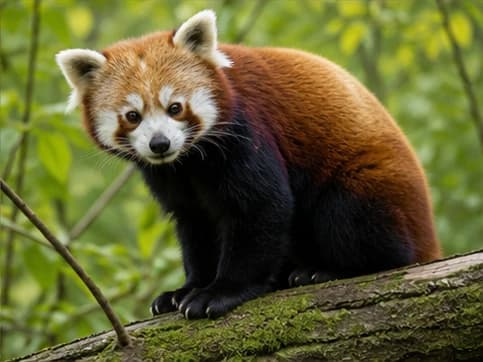
Animal facts hub
Browse 90 explained facts across 13 published species, then open the full profile for related facts, FAQs, and source links.
Random fact generator
Every fact links to a published species page with deeper explanations and source links.
Red pandas have a wrist bone that works like a false thumb.
This enlarged wrist bone helps a red panda grasp bamboo shoots while it feeds, much like the similar adaptation in giant pandas.
More Red Panda factsExplore by species
Explore facts from real species pages, with clear explanations, related facts, and source links for every animal.
Mammal
Lions are large social cats best known for their prides, deep roars, and cooperative hunting. They live mainly in sub-Saharan Africa, with a small wild population in India, and their daily lives are shaped by territory, family bonds, and the search for large prey.
10 explained facts
Invertebrate
The common octopus is a flexible, intelligent marine mollusk with eight arms, color-changing skin, and a talent for hiding in plain sight. It lives in tropical and temperate seas, hunting crustaceans and mollusks while avoiding larger predators with camouflage, ink, and squeeze-through-anything agility.
10 explained facts
Bird
The emperor penguin is the largest living penguin and one of the most extreme bird species on Earth. It survives Antarctic winter, breeds on sea ice, dives deep into the Southern Ocean, and uses social huddling plus specialized anatomy to conserve heat.
10 explained facts
Mammal
Tigers are powerful, mostly solitary big cats built for stalking prey in Asia's forests, grasslands, wetlands, and mangroves. Their striped coats, quiet movement, and comfort in water make them especially distinctive among cats.
6 explained facts
Mammal
Giraffes are the tallest land animals, recognized by their long necks, long legs, patterned coats, and hair-covered ossicones. They browse in African landscapes and use their height to reach food that many other herbivores cannot.
6 explained facts
Mammal
Cheetahs are slender, spotted cats specialized for fast, short sprints. They live mainly in eastern and southern Africa, where their flexible bodies, long tails, and efficient breathing help them catch prey in open habitats.
6 explained facts
Mammal
Koalas are tree-dwelling Australian marsupials that spend much of their lives in eucalyptus forests. Their low-energy leaf diet, strong grip, and pouch-raised young are central to how they live.
6 explained facts
Mammal
Red pandas are small, tree-dwelling mammals with reddish coats, ringed tails, and a strong preference for bamboo. They live in cool Asian forests, where climbing skill and careful energy use help them make the most of a low-calorie diet.
6 explained facts
Mammal
Elephants are the largest living land mammals, known for their trunks, social herds, and long-term care of calves. African and Asian elephants face habitat loss, poaching, and growing conflict with people.
6 explained facts
Mammal
Zebras are African members of the horse family, famous for individual stripe patterns, social lives, and powerful defenses. Plains, mountain, and Grevy's zebras use different habitats and face different conservation pressures.
6 explained facts
Mammal
Kangaroos are Australian marsupials famous for their powerful hopping and pouch-raised joeys. Their large hind feet, muscular tails, and energy-efficient movement make them distinctively adapted for life on the ground.
6 explained facts
Mammal
Giant pandas are bears of the mountain forests of southwestern China. They spend much of the day eating bamboo and use an enlarged wrist bone, often called a pseudo-thumb, to grip their food.
6 explained facts
Mammal
Polar bears are Arctic marine mammals adapted to hunting seals from sea ice. Their swimming ability, sensitive sense of smell, insulated bodies, and denning behavior are closely tied to the frozen ocean environment.
6 explained facts