
Anatomy
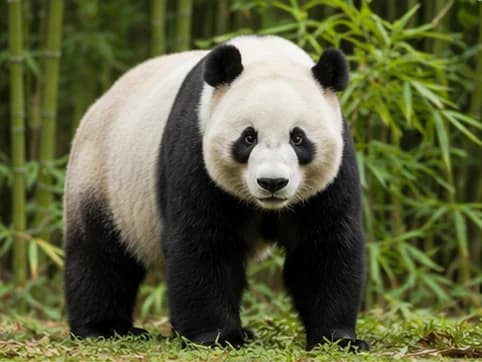
Giant pandas are bears.
Genetic studies confirm their relationship with bears, alongside similarities in anatomy, movement, social system, and reproduction.
Ailuropoda melanoleuca
Giant pandas are bears of the mountain forests of southwestern China. They spend much of the day eating bamboo and use an enlarged wrist bone, often called a pseudo-thumb, to grip their food.
Scientific name
Ailuropoda melanoleuca
Animal group
Mammal
Diet
About 99% bamboo
Habitat
Mountain forests of southwestern China
Social life
Mostly solitary
Conservation status
Vulnerable
Explained facts
Anatomy
Genetic studies confirm their relationship with bears, alongside similarities in anatomy, movement, social system, and reproduction.
Diet
Pandas spend at least 12 hours a day eating bamboo, although they can also eat other plant and animal foods occasionally.
Adaptation
An enlarged wrist bone works with the five digits to grasp and manipulate bamboo stalks.
Reproduction
Newborn cubs weigh only about 85 to 142 grams and are highly dependent on their mothers.
Behavior
Both males and females use scent glands to mark trees, rocks, bamboo, and bushes; these marks carry information for other pandas.
Behavior
Adults usually keep their own space, with brief exceptions for mating and mothers caring for cubs.
The giant panda is a bear with distinctive black-and-white markings and a highly specialized bamboo diet.
Adults are mostly solitary and communicate with sounds and scent marks, especially during the brief breeding season.
Strong jaws, cheek muscles, and back teeth help pandas process tough bamboo. Their pseudo-thumb helps them hold it.
Suitable habitat needs more than bamboo: old-growth forest, more than one bamboo type, water, and places for dens are also important.
Female pandas have a short annual period when they are receptive to breeding and usually raise cubs on their own.
Newborn cubs are extremely small and depend on their mother for warmth, milk, and protection.
Habitat fragmentation, limited breeding opportunities, and bamboo shortages can challenge panda populations.
Protected reserves and habitat connections have supported recovery, though continued forest protection remains important.
Yes. Genetic studies support the giant panda's relationship with bears.
The enlarged wrist bone helps a panda grip and manipulate bamboo.
They live in mountain forests of southwestern China where bamboo, water, and suitable den sites are available.