
Adaptation
Red pandas have a wrist bone that works like a false thumb.
This enlarged wrist bone helps a red panda grasp bamboo shoots while it feeds, much like the similar adaptation in giant pandas.
Ailurus fulgens
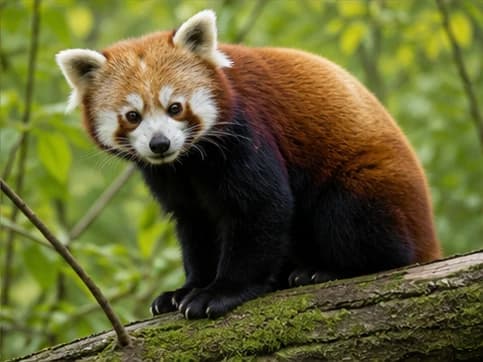
Red pandas are small, tree-dwelling mammals with reddish coats, ringed tails, and a strong preference for bamboo. They live in cool Asian forests, where climbing skill and careful energy use help them make the most of a low-calorie diet.
Scientific name
Ailurus fulgens
Animal group
Mammal
Diet
Mostly bamboo leaves and shoots
Habitat
Cool temperate forests with bamboo
Activity
Often active at dawn and dusk
Conservation status
Endangered
Explained facts
Adaptation
This enlarged wrist bone helps a red panda grasp bamboo shoots while it feeds, much like the similar adaptation in giant pandas.
Diet
Red pandas eat mainly bamboo leaves and shoots, though they may also eat acorns, flowers, fruit, eggs, small birds, and small rodents.
Adaptation
The tail can be nearly as long as the body. It supports balance in trees and can cover the face when a red panda rests in cold conditions.
Adaptation
Their claws help them grip tree trunks as they descend, an ability that suits their largely arboreal lifestyle.
Behavior
They usually rest during the hottest part of the day, then forage after dark or around the lower-light hours of the day.
Behavior
Adults communicate using scent, visual signals, and calls, but they typically spend much of their time alone outside the breeding season.
A red panda is a small forest mammal with a reddish coat, pale face markings, and a long tail. It is not closely related to the giant panda despite sharing a bamboo-heavy diet.
Most red panda activity happens in trees, which offer food, resting places, and escape routes from predators.
Red pandas live mainly in cool temperate forests with a dense bamboo understory, fallen logs, tree stumps, and fresh water.
Their forest habitat can include many bamboo species, though a red panda selects only a small number of the most nutritious types.
Bamboo is a low-energy food, and red pandas digest only a portion of what they eat. They can spend a large share of their waking hours foraging.
Strong molars and chewing muscles help them process tough plant material, while the false thumb helps with grasping.
Forest clearing, hunting, and the pet trade have reduced red panda populations and fragmented their habitat.
Protecting connected forests and supporting local conservation programs are important for the species' future.
They eat mostly bamboo leaves and shoots, while also taking foods such as acorns, flowers, fruit, eggs, and small animals on occasion.
The tail helps with balance in trees and can be used like a warm cover over the face while resting.
They share some bamboo-feeding adaptations, including a false thumb, but they are different kinds of mammals.