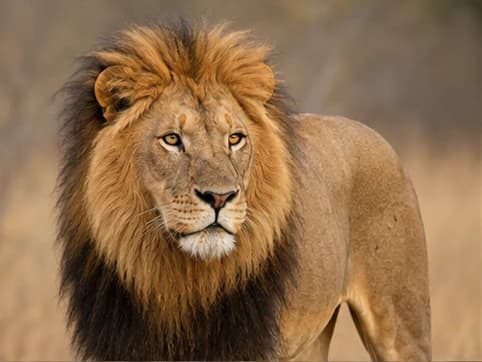
Lions are the only truly social big cats.
Most cat species are solitary, but lions form prides made of related females, their cubs, and a few adult males. This social system supports group hunting, shared cub protection, and territory defense.
A lion pride is usually built around related females.
Female lions in a pride are often mothers, sisters, cousins, and daughters. Older females may remain together for life, while adult males typically move between prides over time.
A male lion's mane is a visual signal as well as protection.
The mane can make a male look larger to rivals and more noticeable to females. It may also help protect the neck during fights over territory or breeding access.
Lions can rest for most of the day.
Lions often alternate short periods of activity with long resting bouts. San Diego Zoo notes that lions may spend up to 21 hours in a day lying down, sleeping, or resting.
Lionesses often cooperate when hunting.
During group hunts, smaller and faster females may chase prey while heavier females ambush or capture it. The roles can change depending on the prey and which females are hunting.
Lions use roaring as part of territory communication.
Roaring helps lions announce their presence and coordinate with other pride members. Scent marking, rubbing, and ground scraping also help define territory.
Lions now occupy only a small part of their historic range.
San Diego Zoo Wildlife Alliance reports that lions occupy about 8 percent of their historic range. Their remaining populations are often fragmented and isolated.
Lions rely on short bursts of speed, not long chases.
A lion can sprint fast for short distances, but it is not built for long pursuit. Successful hunts depend on cover, timing, cooperation, and getting close enough before the final rush.
Lion cubs can have spots that fade as they grow.
Young lions may show spotting on their coats. These markings usually become less obvious with age as the adult tawny coat develops.
Male lions do more than display a mane.
Adult males often patrol, scent mark, and defend the pride's territory. They may hunt less often than females, but territory defense can be crucial for cub survival and pride stability.