
Adaptation
Young elephants must learn to control their trunks.
Calves are initially clumsy with their trunks and gradually master this versatile body part as they grow.
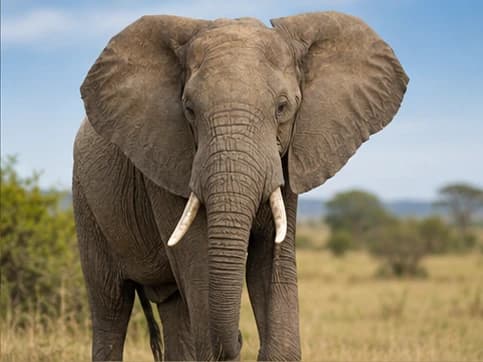
Elephants are the largest living land mammals, known for their trunks, social herds, and long-term care of calves. African and Asian elephants face habitat loss, poaching, and growing conflict with people.
Family
Elephantidae
Animal group
Mammal
Diet
Herbivore
Habitat
African and Asian landscapes
Social life
Herd-based
Main pressures
Poaching, habitat loss, and conflict
Explained facts
Adaptation
Calves are initially clumsy with their trunks and gradually master this versatile body part as they grow.
Behavior
As calves play and develop, they also learn how to communicate, who to follow, and how to navigate herd social dynamics.
Behavior
A San Diego Zoo study recorded elephants walking an average of 3 to 7 miles a day, comparable with observations from Africa.
Conservation
As farms and infrastructure expand, elephant habitat can shrink and conflicts over space and resources can increase.
Behavior
Elephant care specialists at San Diego Zoo have observed elephants lying down to sleep for a couple of hours and have even heard them snore.
Conservation
San Diego Zoo reports that Asian and African savanna elephants are Endangered, while African forest elephants are Critically Endangered on the IUCN Red List.
Elephants are large, intelligent herbivorous mammals. Their trunks are used for many daily tasks, and calves spend years learning how to use them well.
The term elephant includes African and Asian species, whose needs and conservation status can differ.
Elephant calves are protected while they develop coordination, communication, and their place in a herd.
Social relationships between mothers, calves, and other herd members are an important part of elephant life.
Elephant conservation involves protecting habitat, reducing poaching, and supporting coexistence between people and elephants.
Long-term monitoring of movement, behavior, and health helps guide conservation decisions.
Elephants need large, connected landscapes where they can find food, water, and safe routes through seasonal habitats.
GPS movement studies help conservationists understand how elephant travel patterns relate to changing landscapes and human activity.
Elephants use trunks for many tasks, and calves take time to develop full control over them.
Poaching, habitat loss and fragmentation, and conflict with people are major threats.
No. Conservation status differs among elephant species; African forest elephants face the highest listed risk in this source.