
Record
Giraffes are the tallest land animals.
Their necks and legs can each be about 1.8 meters long, allowing giraffes to browse high above many other herbivores.
Giraffa
Giraffes are the tallest land animals, recognized by their long necks, long legs, patterned coats, and hair-covered ossicones. They browse in African landscapes and use their height to reach food that many other herbivores cannot.
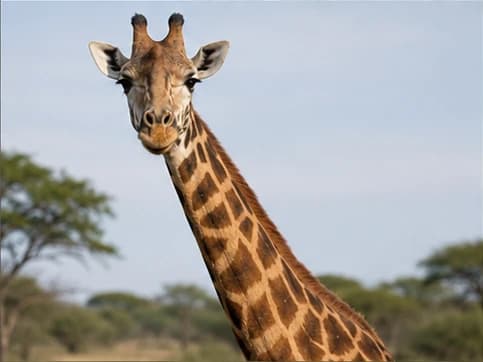
Scientific name
Giraffa spp.
Animal group
Mammal
Diet
Herbivore
Habitat
African savannas, grasslands, and woodlands
Range
Africa
Closest living relative
Okapi
Explained facts
Record
Their necks and legs can each be about 1.8 meters long, allowing giraffes to browse high above many other herbivores.
Anatomy
The difference is size: each giraffe neck vertebra can be more than 25 centimeters long.
Anatomy
Ossicones are the hair-covered structures on a giraffe's head. Males can use them during sparring contests.
Anatomy
Coat colors and markings vary by species and individual. The patterns can help people distinguish one giraffe from another.
Behavior
When threatened, giraffes can kick with great force. Their height, speed, and group living also help them avoid danger.
Record
A major specialist-group assessment recognized northern, reticulated, Masai, and southern giraffes as distinct species.
A giraffe is an African hoofed mammal and the tallest animal on land. Its closest living relative is the much shorter okapi.
Its long neck does not contain extra vertebrae; instead, the same basic number of bones is greatly elongated.
Giraffes have spotted coats, a small back hump, long legs, and ossicones. Both sexes have ossicones, though males often have more pronounced skull growth as they mature.
Patterns differ among giraffe species and individuals, ranging from light tan markings to very dark patches.
Giraffes are herbivores that use their height and long tongues to browse leaves and shoots high in trees and shrubs.
Their body shape lets them take advantage of food that is out of reach for many other grazers.
Giraffe species occur in different parts of Africa, especially in savannas, grasslands, and open woodlands.
Conservation needs vary among species and populations, so protecting suitable habitat and monitoring local groups are important.
Giraffes typically have seven neck vertebrae, the same number as humans, but each bone is much longer.
They are called ossicones. Both male and female giraffes have them, and males can use them while sparring.
Giraffes are herbivores that browse leaves and shoots, using their long necks and tongues to reach vegetation.