
Behavior
A wolf pack is essentially a family group.
A typical pack includes a breeding pair, their pups, and often older offspring from previous years. The pack works together to hunt, raise pups, and defend territory.
Canis lupus
Wolves are highly social wild canines known for their pack structure, haunting howls, and cooperative hunting. Gray wolves once ranged across most of the Northern Hemisphere and now live mainly in wilderness areas of North America, Europe, and Asia.
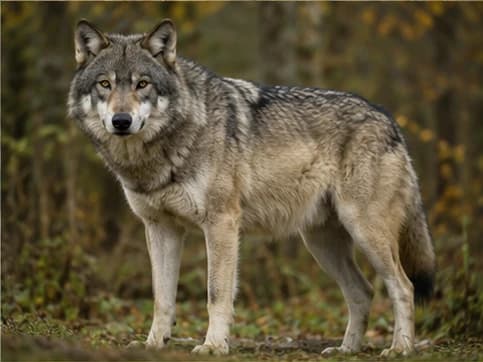
Scientific name
Canis lupus
Animal group
Mammal
Diet
Carnivore
Habitat
Forests, tundra, plains, and mountains
Range
North America, Europe, and Asia
Social structure
Family packs
Explained facts
Behavior
A typical pack includes a breeding pair, their pups, and often older offspring from previous years. The pack works together to hunt, raise pups, and defend territory.
Behavior
Howling helps pack members stay in touch, reassemble after separation, and warn other packs to stay away. Individual wolves can be recognized by the pitch and tone of their howl.
Behavior
Territory size depends on prey availability: packs in areas with fewer prey need larger territories. Wolves patrol and scent-mark boundaries regularly.
Anatomy
Their powerful bite helps them bring down large prey such as deer, elk, and moose. Strong jaw muscles and specialized teeth allow wolves to crush bone and consume most of a carcass.
Anatomy
Despite the name, gray wolves may be pure white, black, brown, reddish, or any mix of these colors, depending on geography and individual genetics.
Adaptation
Their lean build, strong legs, and efficient gait let them cover 50 kilometers or more in a day while searching for prey or patrolling territory.
The gray wolf is the largest wild member of the canine family. It is a social carnivore that lives and hunts in family-based packs, a structure that sets it apart from most other predators.
Wolves once inhabited most of the Northern Hemisphere. While they have been eliminated from much of their historic range, they still occupy significant wilderness areas in North America, Europe, and Asia.
Wolves are highly adaptable and can live in forests, tundra, grasslands, mountains, and even arid regions as long as prey is available. They need large, connected landscapes to support their territories.
European wolf populations survive mainly in eastern and southern Europe, while North American wolves are most common in Canada, Alaska, and parts of the northern United States.
Wolves are carnivores that primarily hunt hoofed mammals such as deer, elk, moose, and wild boar. Pack hunting allows them to take down prey much larger than any single wolf could handle.
Hunting is a coordinated effort: pack members may take turns leading the chase, flanking, and testing the prey. Not every hunt succeeds, and wolves sometimes scavenge from other predators.
A wolf pack is a close-knit family. Pups are cared for by the entire pack, and older siblings often help feed and protect younger littermates before dispersing to find their own territory.
Wolves communicate through howls, barks, growls, whines, body posture, and scent marking. Howling helps maintain contact across a pack's large territory and reinforces social bonds.
A typical wolf pack has 5 to 10 members, though packs can be smaller or larger depending on food availability and the number of surviving pups.
Wolves howl to communicate with other pack members, reassemble after separation, and warn rival packs to stay away from their territory.
Wolves mostly hunt large hoofed mammals such as deer, elk, moose, and wild boar, but they also eat smaller animals and sometimes scavenge.